
Latest Haul (and Impressions): Icebreaker II
August 9, 2007 by Tim · Leave a Comment
 Well, what’s this? A new 3DO release? That’s right… As I mentioned on one of the first posts to this blog, OlderGames.com was planning to bring us several new 3DO games. Well, the time is now. The Classic Gaming Expo has come and gone, the games are officially released, and everyone that placed a pre-order has the game in their hands.
All of the games that OlderGames has released were incomplete works-in-progress and are at various levels of playability. Powerslide seems barely playable. Decathlon is playable, but with a fair number of bugs. Onside looks quite stable, but doesn’t interest me much. Icebreaker II, on the other hand, feels like it was very much ready for an official release, and that’s why it’s the only one I decided to buy. The only thing that indicates the game isn’t finished is that there is space on the level select screen for 150 levels, but only 118 are present. (Oddly enough, levels 149 and 150 have been created even though 117-148 don’t exist.) On top of that, there’s a whole collection of small tech demos to play around with, outside the scope of the game itself.
So how is it? Was it worth waiting 13 years after the origial release for the sequel? Well, I guess it depends on how much you were actually anticipating it in that time. For someone like me, that hasn’t played the first and only found out there was an unreleased sequel a couple years ago, it wasn’t a bad wait at all! But I pity those who were waiting with baited breath (if any of you exist). Not that it’s a bad game, but rather… Why would you be waiting with baited breath for any game for 13 years? (Says the guy waiting for the NiGHTS sequel. D’oh.)
For the unfamiliar, I think the best way to describe Icebreaker is as a puzzle-slash-shooter game. The object is, as a floating white pyramid, to float around each level destroying all of the other pyramids. Most of the pyramids are static and can be broken either by running into them or shooting them. Some take more shots than others, some take more rapid shots than others, some turn into pools of acid, some turn into pools of lava. On top of that, there is a constant onslaught of mobile enemy pyramids closing in on you, so you have to negotiate destroying them while destroying the static pyramids.
Though I haven’t played much yet, I think I can confidently say I’ve never played another game quite like this one (of course, like I said, I never played the first game). From what I’ve seen, Icebreaker II is fresh and fun. The concept is unique and I really like the colorful, cartoon-like graphical style. Naturally, I’ll have a full review sometime in the future…
Impressions: Populous, Killing Time, Landstalker
July 28, 2007 by Tim · 3 Comments
I mentioned on the About page that I’m something of a lazy gamer. Or, at the very least, I’m not a very dedicated gamer. When I was younger, I could dedicate myself to a single game for hours on end, day after day. I just don’t have the attention span for that anymore. I think it happened when I started spending more time on the internet. So either the internet destroyed my attention span, or I just grew up a little, I’m not sure what it is. But either way, I play a lot of games, and I play a lot of games for a couple hours at a time.
Eventually, I’ll get around to playing each game long enough to properly review it. (After all, that’s the point of this site.) But in the meantime, I’m going to post quick impressions of the games that I’ve been playing lately but haven’t spent enough time with to properly review. So here goes:
- Populous (SNES): I’m not sure what it says about a game when its tutorial mode provides absolutely no instructions in any way. I bought the game used, cart-only, and was utterly lost. Shouldn’t a tutorial at least describe what all the buttons on the screen do? Once I found a transcription of the manual online, things fell into place. This is an unusual sim/strategy/god game where your main power is to raise and lower the land so your followers can farm, gain strength, and eradicate the followers of your rival deity. I’m going to have to spend a lot more time with this one before I really form much of an opinion of it, but I’ve found it intriguing so far.
- Killing Time (3DO): Another awkward early 3D game for the 3DO. It’s an FPS that does a few things right and a few other things horribly wrong. I love the seamless transitions between areas/levels, as if it’s one big environment I’m exploring, rather than segmented levels. I hate the ugly enemy sprites that repeat ad nauseum (there are only one or two different enemies per area). I’ve only played through the first few areas, but so far, it seems like a technically sound game with smooth controls being brought down by poor enemy variety and a total lack of ammo. In fact, I’m pretty sure I have to ditch my current save because I only have one bullet left and about four enemies to kill to advance any further. Argh.
- Landstalker (Genesis): Now this game is promising. It’s a fun action-adventure/RPG with platforming elements, puzzle-solving, and fantastic graphics that manage to look appealing despite the miniscule color palette of the Genesis. I was a fan of Dark Savior on the Saturn, so it’s no wonder I’m liking this one. I’m just having some doubts about the controls, though. It’s an isometric game, so you spend a lot of time moving in diagonals. I’m not sure yet if the controls are unresponsive or if the six-button pad that comes with the Genesis 3 just doesn’t do diagonals well. I think I’ll track down a different controller before making my final judgment, but so far so good.
What have you guys been playing lately? Have any quick impressions of your own to share? Hit the comments…
Ninja Spirit (TurboGrafx-16)
July 25, 2007 by Tim · Leave a Comment


As your footsteps fall silently upon the floorboards of the ruined temple at which you were born and raised, you barely have time to contemplate the untimely and unjust death of your father and the vengeance which you have sworn to obtain. With swiftness and deftness that can only come with a lifetime of training, you dispatch foe after foe with ease. But they are relentless. Bombs, knives, and swords fly at you as your enemies swarm about, seemingly appearing from thin air. Where are they coming from? Why do they want you dead? Why did they kill your father? There’s no time to ask questions. There’s no time to think, only to react.
Your sword slices through your attackers and shields you from their bombs and knives, but it is becoming more and more difficult to handle each wave of aggression on your own. You defeat an unusual ninja in bright orange, and as if on cue, an apparition appears. But this apparition does not attack. Instead, you discover that it mimics your every move. You gracefully jump hundreds of feet into the air and drift softly to the ground. It follows you every inch of the way, without a hint of effort. You look closer, and on the face of this apparition, you see yourself. You see your anger, your hatred, your determination. This apparition is your spirit. It is invulnerable and has every drop of strength and skill that you have. It will protect you.
Time Capsule: The NES Network
July 16, 2007 by Tim · Leave a Comment
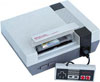 Back when I subscribed to gaming magazines, I always liked to hold onto them and look through them a few years later. It was always fun to read the old articles in a new light with the knowledge of what came true and what didn’t. It seems I’m not the only one with that interest, as magazine scans seem quite popular in the retro gaming community. Unfortunately, I threw away all my old magazines while I was in college, so I can’t partake in that pastime any longer.
But thanks to the internet, there’s actually a whole new world of old game-related articles to explore — ones outside the gaming press. A lot of people look through old game magazines, but what about old newspaper articles, press releases, and trade magazines? All of them cover video gaming in some way, and I find them incredibly interesting to read through. What was the press saying about the release of the Game Boy? What were they saying about the heady days of the mid-90s when the market was flooded with various game platforms? What products and projects were announced but never saw the light of day? There are an interesting number of parallels between the industry of 15-20 years ago and the industry of today.
I’d like to kick this feature off with an article about a project that Nintendo and AT&T announced in 1989 that seemingly disappeared immediately afterwards: the NES Network.
Nintendo, AT&T to plug into the interactive field – Nintendo of America Inc. and American Telephone and Telegraph Co. form joint venture to enter computer shopping field
Discount Store News, Sept 4, 1989 by Arthur Markowitz
Nintendo, AT&T to Plug Into the Interactive FieldTwo major corporations, American Telephone & Telegraph and Nintendo of America, last month charged up the interactive computer shopping and information service field when they announced plans to enter the nascent business.
The two companies are expected to form a joint venture to originate and deliver shopping, entertainment and information services, as well as pursuing separate endeavors in the interactive business.
This seems like it was a common concept, back in the day. But ultimately, the PC and the web proved to be the breakthrough technologies for electronic shopping and information services. Still, devices like the modern consoles are starting to realize this original vision — the Wii’s news and weather channels, the Xbox 360’s movie downloads, and the PlayStation Network’s upcoming music service are all reminiscent of this old goal.
Nintendo, meanwhile, has set up an NES Network division to develop and market an information service by next year. It has named Jerry Ruttenbur, previously a senior vice president with Home Box Office, to the newly created post of vice president of network products to head up the NES Network.
The NES Network? Jerry Ruttenbur? What? Who?
Nintendo will use its game system now in about 20 million households as the base for the NES Network.
The control deck used to run the Nintendo game–which sells for about $100 in discount stores–will be the processor for the projected information system, with a keyboard, modem and a device that combines a computer disk reader and a facsimile machine as the other hardware. The other hardware together is expected to cost about another $300 to $400.
I can definitely see the logic behind Nintendo’s strategy here. It was an era where PCs were still incredibly expensive and not many people owned them. But millions had NESes. Why not turn those millions of little gray boxes into networking capable machines for a fraction of the cost? It certainly seems to make sense. But then again, the WebTV probably made sense, too…
A Nintendo spokesman said the company was considering several different configurations for its system and hadn’t decided on the exact technology or even marketing plan for the NES Network.
Ruttenbur is responsible for design, marketing and sales of products for the system. The company won’t detail its plan until after he joins Nintendo in October, he said.
Hmm, now maybe we’re getting some hints about why this never came to pass. Did the plan for Ruttenbur to join Nintendo fall through? Did he join but fail to design a compelling product? Actually, a little additional reading indicates that he did join Nintendo of America but wasn’t given adequate support for designing the network and hardware. He ultimately resigned shortly thereafter, in 1991. It seems NOA was not that enthusiastic about the project, despite the existence of a similar service in Japan.
Nintendo’s thrust into interactive information services is part of the company’s efforts to change its game system from a toy into a computer, a move that will blur the merchandising distinction between toys, consumer electronics and computers.
The spokesman said Nintendo’s strategy was to get its technology and basic system into as many households as possible and then provide other hardware that will turn what was first viewed as a toy into a multi-function device.
This is probably the most compelling section of the article. Convergence devices have been a hot topic for years, and apparently even Nintendo was on the bandwagon at one point. In fact, people in the tech industry are still talking about blurring the line between game systems, PCs, and other electronic devices. You don’t need to look any further than the Xbox 360 and PlayStation 3 to see it. Interestingly, Nintendo seems to be the least ambitious of the modern game companies in this regard, despite their attitudes 18 years ago.
Nintendo strived to first “offer a non-intimidating and affordable device to consumers and bit by bit build into a computer.” The NES Network’s success would be based on the huge installed user base of the Nintendo game, he said.
But while their strategy to turn game systems into computers is long gone, their goal to create “non-intimidating” devices is as strong as ever with the DS and Wii…
I think this article leaves us with plenty to think about. What could have been? What would the internet look like today if efforts by Nintendo and others had succeeded in getting the masses online in the early 90s? What would game systems look like today if these project were actually seen through? Would the notion of a “game system” be completely obsolete? I kind of like the niche that game systems have established for themselves, but it’s no doubt that a lot of people had much bigger ideas.
If you’re interested in more details on AT&T’s role or more information on what Nintendo’s Japanese service was like, I’d recommend reading the full article.
Virtua Cop (Sega Saturn)
July 15, 2007 by Tim · 2 Comments


Light gun games have something of a linear history. Virtua Cop may have shaken up the genre by bringing into the 3D era, but its gameplay is not nearly as revolutionary as its graphics were. In fact, you can trace the gameplay straight back to one of the earliest NES games — Hogan’s Alley. In Hogan’s Alley, you were a cop, wandering through a seedy area, shooting down thugs while trying to hold back your itchy trigger finger when an innocent appears. In Virtua Cop, you’re a cop, wandering through a seedy area, shooting down thugs while trying to hold back your itchy trigger finger when an innocent appears. 16-bit light gun games were much the same (see Lethal Enforcers) as are modern ones (see the Time Crisis and House of the Dead series).
But saying Virtua Cop sucks because light gun games are all the same would be unfair. It’d be like saying Soul Calibur sucks just because it’s a 3D fighter, or Streets of Rage sucks just because it’s a side scrolling beat-’em-up. The real question is whether or not I have fun playing it. And, quite simply, I do. It’s certainly not worth playing with the controller, but get yourself a Stunner, and you’ll be mowing down baddies left and right.
EA not totally put-off by 3DO experience
July 13, 2007 by Tim · Leave a Comment
 It’s not often that the 3DO gets any mention in the modern gaming environment. While other older platforms like the NES, SNES, Genesis, and TurboGrafx-16 are seeing new life with services like XBLA and the Wii Virtual Console, the 3DO is pretty much dead and forgotten to modern console owners. But, it’s interesting to see that not everyone at EA was soured by their close association with the platform.
Gamasutra briefly asked Frank Gibeau, EA’s vice president and general manager of North American publishing, about EA’s experience with the 3DO and the possibility of them entering into another such hardware partnership. Surprisingly, Gibeau wasn’t totally averse to the idea:
“I worked on (the 3DO),†began Gibeau, “and I’d never say never. I was a product manager on some of the titles, like Shockwave, and Road Rash, so I was part of that team, building the games, so I’m really familiar with what happened.”
“I think the challenge that we had with 3DO was platform positioning,” he continued. “It was the Swiss Army knife of hardware, and we weren’t really sure what it was supposed to do. I think when we look at our business, what’s vitally important to us is the entertainment and customer connection.â€
He’s right on the money about the 3DO’s identity crisis back in the day. But looking at Gamasutra’s original question, is it even relevant? Is there room for another platform like the 3DO? One that’s just a spec that can be manufactured by anyone with a license? Or, perhaps more relevant to EA, one where the hardware designers depend on a partnership with a separate software company to drive software development?
It worked with NEC and Hudson with the PC-Engine, but I have a feeling that today’s first-party centric market came about for good reason. After all, who better to build hardware and software than the people that designed the system?
RetroTube: Best game commercial ever?
July 9, 2007 by Tim · 4 Comments
Imagine, for a moment, that you’re Nintendo and you’ve just wrapped up development on The Legend of Zelda: A Link to the Past for the SNES. Now it’s time to sell the game to the public — a game that would go on to be considered by many as the greatest game of all time. How do you market it? Do you tout its wonderful graphics? Its deep gameplay? Its massive world to explore? Its majestic atmosphere?
Apparently not. Apparently, you use this travesty…
I think I’ll just pretend that Nintendo knew the game was good enough to sell itself and made this commercial as some sort of twisted joke. It’s better for the psyche.
Streets of Rage (Sega Genesis)


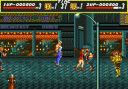
What’s this? An early ’90s Genesis side-scrolling beat-em-up that doesn’t suck? I originally intended to review Golden Axe, but it was so awful that I just couldn’t bring myself to keep playing. (I’ll have to play it when I’m in a more masochistic mood, I guess.) So when I decided to play Streets of Rage instead, I had low expectations. It had been a while since I had played the game, so I couldn’t remember much and wasn’t sure what I was getting into. I had fond memories, but I had the sinking feeling that those memories were of Streets of Rage 2, not the original. Thankfully, it turned out I was right, and the game is pretty playable.
Streets of Rage is Sega’s response to Final Fight and is another entry in what used to be an extremely popular genre. Streets of Rage, Final Fight, Double Dragon, River City Ransom, Teenage Mutant Ninja Turtles, Altered Beast, Golden Axe… What the hell were we thinking back then? I guess we really liked walking to the right and repeatedly pushing the punch button. Streets of Rage is no different. Like the rest of the group, it’s pretty much a simple button-masher with very little in the way of depth. You can walk, jump, kick, punch, summon special attacks, pick up weapons, and… Well, that’s about it. Oh yeah, occasionally you’ll grapple someone.
Recommended: Logitech 3DO Controller
July 3, 2007 by Tim · Leave a Comment
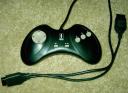 Third party controllers are generally the bane of any serious gamer. Everyone knows that first party controllers are the best and anything else is merely second class. Third party controllers are the controllers you give to guests you don’t like, or to that guy that’s just too good and needs a handicap.
Well, that’s all fine, but what if there is no true first party controller? This conundrum is unique to the 3DO and its unusual hardware licensing structure. For those who are unfamiliar with the system, the 3DO was merely a specification. Hardware manufacturers could license that specification and create the hardware in any form-factor they desired — it just had to meet certain requirements. So while Panasonic’s REAL Player may be the most famous of the 3DO systems, there were additional units from Goldstar, Sanyo, and Creative. Each system was different and each one came with its own unique controller.
Without a de-facto standard, where do you turn for the best controller? Most 3DO gamers seem to prefer the standard Panasonic pad to the rest, most likely because it’s the one they’re most familiar with. But after playing through Total Eclipse, I was reminded of how there really is one 3DO controller that stands above the pack — the Logitech pad that originally came packed in with the party game Zhadnost.
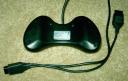 While the Panasonic pad is bulky and hefty, the Logitech pad is sleek and sexy. Its shape is reminiscent of the fantastic model 2 Saturn pad and molds nicely to your hand. The shoulder buttons tilt inward (as all proper shoulder buttons should) so that you can easily press them with your fingertips, and the d-pad is circular and slightly raised. The tactile feedback on all the buttons is pretty much perfect, and the d-pad feels much less stiff than the Panasonic pad. On top of that, Logitech even put the expansion port for additional controllers at the end of the cord, rather than on the back of the controller. That way, when you play multiplayer, you don’t have to have an extra cord hanging off of your controller. The only possible downside is that this pad omits the headphone jack that the original Panasonic pad has. But really, who uses that?
Now that the 3DO is seeing a few new releases, I suspect we may see a small surge of interest in the system. Maybe a few new people will jump on board, maybe a few old fans will rediscover the system. If you’re one of those, then I suggest you try to track down one of these controllers. I found mine solo on eBay, but you may be able to find one by tracking down retailers that are selling the Zhadnost bundle.
Total Eclipse (3DO)
July 1, 2007 by Tim · 2 Comments



Like with my first Saturn review, I spent some time debating what I wanted to cover first for the 3DO. There are some great games for the system, but most of them are overshadowed by the overwhelming amount of crap that is available, too. I wanted to pick something that I felt properly represented the spirit of the 3DO, and I think Total Eclipse does that. It’s not because Total Eclipse is a particularly good game (or a particularly bad game). I think it’s just a good representation of the games that are available for the 3DO — it’s prototypical for the system.
Total Eclipse is a fantastic technical feat for its time. The terrain and enemies are all rendered in crisp, clear 3D with a slick, smooth frame-rate. It features CD audio, pre-rendered cut-scenes, and does a great job of making loading times virtually transparent. Unfortunately, it’s just not a very exciting game. The first couple of worlds drag on without much of interest to report. You’ll face straightforward terrain, easy enemies, and a soundtrack that alternates between dull, tired sounding guitar riffs and cheesy soap-opera-style saxophone.
Frankly, the whole time I was playing Total Eclipse, I couldn’t shake the feeling that I was just playing a polished but generic version of Star Fox. They’re very similar games — both are futuristic rail-shooters where you take on the role of a fighter pilot heading off to save the solar system. But while Total Eclipse excels in many of the technical areas of game design, it just doesn’t match Star Fox in terms of fun.
Polls
 Loading ...
RSS Feeds
